Real Extreme Bike Racing Game
Gaming Switch LLCAdventure
3.56.00 Reviews
- Version
- 1.0.4
- Installs
- 5.00M
- Age Rating
- Everyone
Screenshots
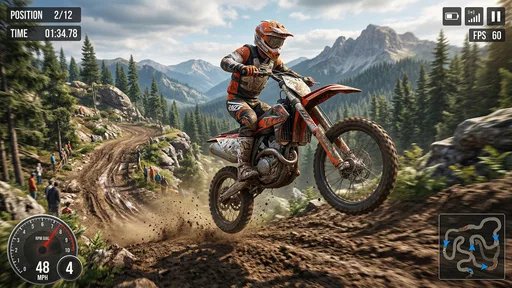
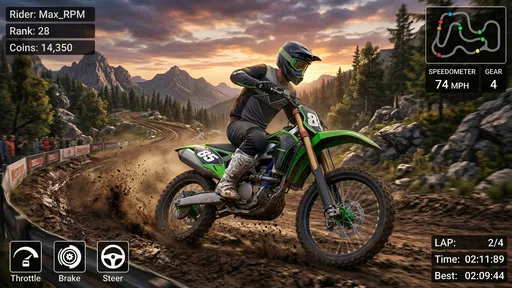
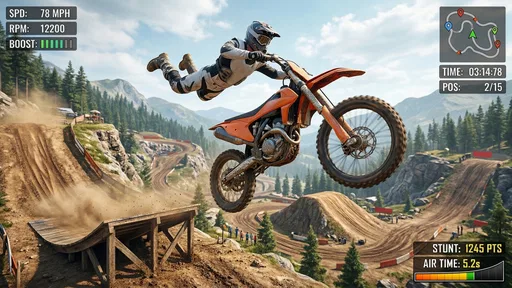
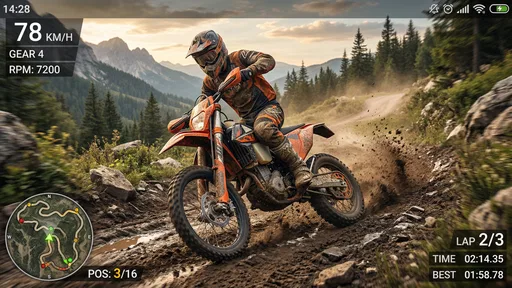
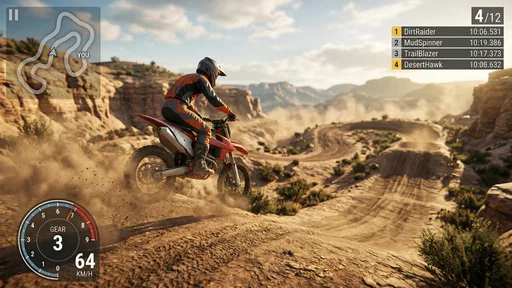
Our Review of Real Extreme Bike Racing Game
 Analysis by Appyee
Real Extreme Bike Racing Game is the kind of mobile adventure I open when I want immediate movement rather than a long tutorial or a complicated story. I choose a bike, enter the road, thread through traffic, and look for a chance to turn ordinary riding into a stunt. That simple first action explains the appeal: the game puts me in motion quickly, then asks me to balance speed, control, and risk.
Gaming Switch LLC presents it as a free game for players who enjoy open-world bike racing, and my experience fits that description more as a quick, repeatable driving playground than as a deeply structured campaign. It is available for players rated Everyone, supports devices running Android 8.0 or later, and its current version is 1.0.4. Those details matter because this is an easy game to try, but its value depends heavily on whether you enjoy repeating short bursts of riding and stunt practice.
How the ride becomes a repeatable challenge
I treat each ride as a small experiment rather than expecting every attempt to feel new: pick one aim, such as reading traffic more calmly or setting up a stunt, and judge the run by whether I learned something useful. That makes the restart feel purposeful instead of frustrating, and it gives me a practical way to tell whether this repeatable style is holding my attention.
The first action is simple, but traffic changes the mood
The first thing I notice is how quickly the game gets to its central activity. I am not spending my opening minutes arranging a garage or reading a long explanation. I am riding through traffic, and every vehicle becomes part of the immediate problem. A clear stretch invites acceleration, while a crowded section makes me adjust my line and timing.
That traffic is more important than the broad open-world label might suggest. An open area can sometimes feel empty in a racing game, but moving vehicles give each ride a small decision point. I can stay conservative and preserve control, or I can squeeze through a tighter gap to create a more exciting run. When I am in the mood for a relaxed ride, the roads offer room to experiment. When I want pressure, the traffic supplies it without needing a separate mission structure.
The controls are most enjoyable when I treat the bike as something that needs anticipation rather than constant correction. I try to look beyond the vehicle immediately in front of me, choose a route early, and avoid making a last-second movement just because a gap appears. That habit is one of the first useful lessons the game gives me: speed alone is not the same as progress.
For a younger player or someone new to mobile racing, that direct start is helpful. The age rating is Everyone, and the premise is easy to understand without prior knowledge of a series. For an experienced racing fan, however, the lack of a more involved opening may feel lightweight. This is not the right choice if I want a carefully introduced career, a layered narrative, or a realistic simulation of motorcycle handling.
Stunts turn ordinary riding into a risk decision
Stunts are where the ride stops being only about avoiding traffic. A safe route can keep a session alive, but a stunt gives me a reason to accept danger. The interesting choice is not simply whether I can perform one; it is whether the possible payoff is worth entering a position that may end the run or force me to recover.
I get better results when I separate stunt attempts from casual travel. During a normal ride, I use the road to learn the spacing of traffic and the amount of room I need to correct the bike. Once I understand the area, I start treating suitable ramps or open sections as deliberate practice points. This makes the environment feel more useful than it does when I rush through it without a plan.
A practical tip is to build a route around one goal at a time. On one attempt, I focus on staying alive through traffic. On another, I look for a stunt opportunity. Trying to combine maximum speed, close passes, and a difficult trick immediately creates unnecessary mistakes. The game becomes more satisfying when I turn each run into a small experiment instead of demanding a perfect performance from the start.
This is also where the game’s limitations become clear. Players looking for a broad selection of finely tuned bikes, detailed racing regulations, or a realistic stunt-training system may find the experience less substantial than a dedicated simulator. Its strength is immediacy. It gives me a place to ride and take risks, but it does not replace a full racing career or a technically demanding motorcycle game.
The feedback rhythm: movement, danger, and correction
The core feedback loop works because every action has a visible consequence. I accelerate and the traffic approaches faster. I change direction and the next gap becomes either usable or impossible. I attempt a stunt and quickly learn whether my setup was controlled enough. Even without a long-term objective in front of me, the road keeps answering my decisions.
I find the best rhythm when I alternate between confidence and correction. A clean pass makes me want to push farther, but a near miss reminds me to leave more space. That cycle gives the game its tension. The reward is not only the successful maneuver; it is also the feeling that I understand the road slightly better than I did during the previous attempt.
One non-obvious advantage of this design is that it works well in short breaks. If I have a few minutes before leaving home or while waiting for an appointment, I can start a ride without committing to a large story chapter. The same quality can become a weakness during a longer play session, because the repeated structure may begin to feel familiar once the surprise of the environment wears off.
I also recommend lowering my ambition when the bike starts to feel unpredictable. Instead of responding to every obstacle with a sharp correction, I use smaller movements and leave an escape path. This is especially useful in traffic, where a decision that looks safe from a distance can become dangerous after another vehicle enters the line. The game rewards reading the road early more than reacting dramatically at the last moment.
What counts as a reward here
The main reward is the ride itself: reaching a more demanding section, surviving a close pass, or completing a stunt that I had been setting up. That may sound modest, but it suits the game’s quick-session identity. I do not need a complicated objective to feel a small sense of accomplishment when a risky move works.
The free entry point also lowers the barrier to trying it. The game has passed five million installs, while its average rating is 3.5 from roughly eight hundred ratings. I read that combination as a sign of broad curiosity and mixed satisfaction rather than a guarantee that it will suit everyone. The audience is large enough to show that the basic idea is accessible, but the rating suggests that expectations should remain realistic.
There are in-app purchases priced from $2.99 to $8.99 per item. I would approach those purchases carefully. The game’s most valuable early test is whether I enjoy the riding loop before spending anything. If the traffic, stunts, and repeated attempts already hold my attention, optional purchases may feel more reasonable to consider. If the core ride feels repetitive after a few sessions, buying an item is unlikely to solve that underlying issue.
This is an important trade-off compared with a paid racing game. A free download makes experimentation easy, but the possibility of purchases means I would not judge the entire experience only by its first few minutes. I would first decide whether the basic version gives me enough enjoyable riding, then consider whether any optional spending supports the way I actually play. For a child, I would also make sure purchase controls are handled responsibly on the device.
The reset is part of the appeal
A failed run does not feel like the end of a large project. I can return to the road and try a different line, slow down before the same traffic cluster, or approach a stunt with better preparation. That reset is a central part of the game’s appeal because failure becomes information instead of a major interruption.
I often use the first attempt in an area as reconnaissance. I watch where traffic becomes dense, identify which sections allow more room, and note where my confidence causes me to take a needless risk. The next run is then more focused. This approach makes the repeated structure feel intentional, and it is one of the strongest ways to get more value from the game without needing a formal progression system.
The reset also makes the game suitable for different moods. If I want a calm session, I can concentrate on clean riding and avoid unnecessary stunts. If I want a challenge, I can deliberately choose tighter gaps and attempt more ambitious maneuvers. The same basic environment supports both approaches, although players who need constant new objectives may eventually want a more content-heavy alternative.
That distinction matters when comparing it with the usual alternatives in the adventure and racing space. A story-driven adventure offers characters, missions, and a reason to continue beyond the next attempt. A serious racing simulator offers more precise handling and competition-focused structure. An arcade stunt game may provide more immediate spectacle. Real Extreme Bike Racing Game sits between those options: it combines free riding, traffic danger, and stunt opportunities in a straightforward package.
Who will enjoy it, and who should skip it
I would recommend it to someone who likes mobile games that can be understood immediately and improved through repetition. It is a good fit for players who enjoy weaving through traffic, testing risky routes, and restarting without losing much time. It also suits people who want an open-world-flavored ride rather than a menu of tightly separated races.
I would be more cautious about recommending it to a player who wants realistic motorcycle physics, competitive multiplayer, a detailed upgrade strategy, or a substantial narrative. Those expectations point toward a different kind of game. The open-world setting is useful for free movement, but it should not be mistaken for an enormous, constantly changing adventure.
It is also not ideal for someone who dislikes repetition. The central loop asks me to ride, make a risky choice, see the result, and begin again. That loop is the product, not merely a temporary stage before a much larger experience. If that pattern sounds enjoyable, the simplicity works in its favor. If it sounds monotonous, the game will probably feel thin regardless of how attractive the premise seems.
A realistic everyday session
Imagine I have ten minutes before a bus arrives. I start a ride with one modest target: pass through traffic without forcing a dangerous move. Once I find a comfortable rhythm, I choose a more open section and attempt a stunt. If I land it, I have a satisfying finish to the session. If I fail, I know what caused the problem and can restart for one more try without needing to rebuild a campaign.
That scenario captures the game better than a promise of endless excitement. Its strength is that a small amount of available time can still produce a complete experience. I make a choice, receive immediate feedback, gain either a successful maneuver or a useful lesson, and decide whether another attempt is worth it. The next session begins because I want to improve the last decision, not because the game forces me through a long chain of tasks.
For a longer evening, I would set my own structure. I might spend several attempts learning traffic patterns, then switch to stunt practice, and finish with a fast ride where I accept more risk. Without that personal structure, the game can blur into repeated driving. With it, the same roads become a small testing ground for control and judgment.
Device fit, expectations, and practical advice
The Android requirement of version 8.0 or later makes the compatibility question fairly straightforward for many users. I would still keep expectations aligned with the game’s mobile nature: this is designed around accessible action, not the depth of a console-scale racing production. If I am installing it on an older supported device, I would pay attention to how comfortably the controls respond during busy traffic rather than assuming that the minimum operating system alone guarantees an ideal experience.
Because the game is free, I can make that judgment without an initial purchase. My advice is to play several ordinary rides before deciding whether it deserves a permanent place on the phone. Test all three parts of the loop: steady traffic riding, deliberate stunt attempts, and the restart after a mistake. If only the first few seconds feel exciting, the game may not have enough variety for regular use.
I would also avoid treating every visible opportunity as a challenge that must be accepted. The most enjoyable runs often come from choosing when not to stunt. A controlled ride through a difficult traffic section can be more satisfying than a failed trick attempted simply because the option appeared. That balance between restraint and ambition is where the game has more personality than its short description suggests.
My final view of the loop
After spending time with it, I see Real Extreme Bike Racing Game as a compact action playground built around a clear sequence: start riding, read traffic, take a calculated stunt risk, learn from the result, and reset for another attempt. The feedback is immediate, the rewards are mostly moment-to-moment achievements, and the reason to begin again comes from personal improvement rather than a heavy progression framework.
The best reason to play is the quick decision-making between safety and spectacle. When I approach it as a casual open-world bike game with stunt practice, it delivers an accessible way to fill short sessions. When I expect a full motorcycle career, deep simulation, or constantly fresh objectives, its limits become much more noticeable.
Gaming Switch LLC has made a free adventure game that is easy to sample and simple to understand. Its mixed 3.5 average rating reflects the fact that this focused loop will appeal strongly to some players and feel repetitive to others. I would recommend trying it if traffic dodging and stunt experimentation sound fun, while keeping spending optional until the basic ride has genuinely earned more of my time.
In the end, the game succeeds when I let each run have a purpose. I ride to learn a route, risk a move to test my control, accept the result, and return with a better plan. That is not a massive adventure, but it is a clear one—and for quick mobile sessions, that clarity can be exactly what I want.
Verdict
Strengths of Real Extreme Bike Racing Game
- Responsive controls make cornering and braking feel precise.
- Multiple bikes and upgrades add variety to each racing session.
- Short races are convenient for quick mobile gaming breaks.
- Challenging tracks reward practice and improve replay value.
- Offline play lets you race without a constant internet connection.
Limitations of Real Extreme Bike Racing Game
- Frequent ads can interrupt the experience between races.
- Advanced bikes and upgrades may require significant grinding.
- Some tracks feel repetitive after extended play.
- Touch controls can be difficult to master at high speeds.
- Graphics may look dated on newer phones and tablets.
Similar Picks in This Category
View All
Roblox
Roblox Corporation4.2

Pokémon GO
Niantic, Inc.3.5

Ninja warrior: legend of adven
TOH Games4.6

Ninja Arashi
Black Panther4.6

Eyes - The Horror Game
Fearless Games sp. j.4.5

Critical Action:Gun Strike Ops
FPS Shooter & Action Game4.3
Frequently Asked Questions
What is Real Extreme Bike Racing Game?
Real Extreme Bike Racing Game is a motorcycle racing title focused on fast-paced tracks, challenging turns, jumps, and stunt-style action. After trying it, I found that the main appeal is its combination of speed and control, with races that require more than simply holding the accelerator. Players can compete through different environments, improve their riding technique, and aim for better times and higher scores.
Can I play Real Extreme Bike Racing Game offline?
The game appears suitable for playing without a constant internet connection, which is useful when traveling or when mobile data is limited. However, some features may depend on connectivity, such as advertisements, online leaderboards, updates, or other optional services. It is a good idea to launch the game once while connected to the internet before playing offline, since certain content may need to load first.
Is Real Extreme Bike Racing Game suitable for beginners?
Beginners can enjoy Real Extreme Bike Racing Game, although the controls may take a little practice at first. Steering, braking, acceleration, and landing jumps smoothly are important if you want to avoid crashes. Early races are generally a good opportunity to learn the handling, while later challenges become more demanding. Players who prefer relaxed racing may need patience during the learning curve.
Does the game include bike upgrades or customization?
Real Extreme Bike Racing Game offers progression elements that can make repeated play more rewarding. Depending on the version and available modes, players may be able to unlock additional motorcycles, improve performance, or change selected visual details. Upgrades can help with speed, handling, or stability, but success still depends heavily on timing and control. Check the in-game store carefully, especially where optional purchases are available.
Are there advertisements or in-app purchases?
Like many free mobile racing games, Real Extreme Bike Racing Game may include advertising and optional in-app purchases. Advertisements can appear between races or when claiming certain rewards, while purchases may provide currency, upgrades, or other convenience features. Before downloading, review the store listing and your device’s purchase settings. The game can still be enjoyable without spending money, but progression may require more time.
Play our best games!


